
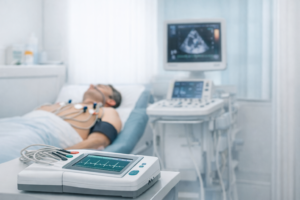
ECG
When speed matters
If you’re currently symptomatic, an ECG can be the fastest first step to clarity.

If you’re feeling palpitations, skipped beats, dizziness, or an “irregular heartbeat” sensation, the right test depends on one key thing: is it happening now, or does it come and go? This guide helps you choose the correct test first — and shows when an ultrasound echo is the better next step.
If you have severe chest pain, collapse, severe breathlessness at rest, or stroke symptoms, seek emergency care first. This page is for non-emergency diagnostic decision-making.
Most “wrong bookings” happen because people choose a test name instead of choosing based on symptom timing. Use this:
If your dominant concern is valves/pumping (murmur, suspected valve disease, reduced exercise tolerance, swelling, breathlessness with a structural concern), start with an ultrasound echo guide: What is an ultrasound echo? and triage page: Symptoms that require an echo.
This table is the “decision shortcut” — it reduces uncertainty and helps you book once, correctly.
| Feature | ECG | Holter monitor |
|---|---|---|
| What it is | A short clinic recording (“snapshot”) of the heart’s electrical activity. | Longer ambulatory ECG recording during daily life (“timeline”). |
| Best for | Symptoms happening now; baseline rhythm check. | Intermittent episodes; symptoms that occur at home/work/sleep. |
| Core advantage | Fast, simple, immediate rhythm view. | Higher chance of capturing the episode you’re worried about. |
| Main limitation | May be normal between episodes. | Doesn’t image structure/valves; it’s still an electrical test. |
| Typical next step | Holter if intermittent; echo if structural concern. | Management plan based on captured rhythm; echo if structural concern appears. |
If you’re currently symptomatic, an ECG can be the fastest first step to clarity.

Holter monitoring is built for “it happens later”, “it happens at night”, and “I can’t catch it”.
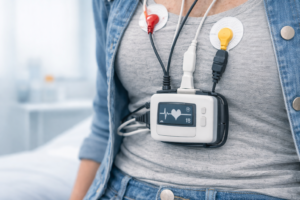
The best test is the one that captures your symptom at the moment it happens.
These are the patterns we see most often. Choose the test based on the story — not just the symptom label.
ECG and Holter answer rhythm questions. Echo answers structure/pumping questions. If your worry is “is my heart working properly?” echo is often the correct diagnostic move.
• What is an ultrasound echo?
• Symptoms that require an echo
If you’re weighing rhythm testing vs imaging, start with the symptom page and then book the test that matches the dominant question.
Practical answers that reduce anxiety and prevent the wrong booking.