
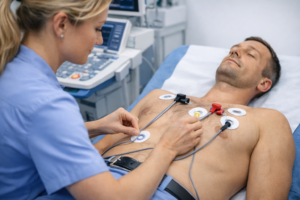
ECG (snapshot)
ECG test (electrocardiogram)
A fast recording of your heart’s electrical activity. Best when symptoms are happening now, or you want a baseline rhythm check with clear next steps.
If you’re feeling palpitations, a fluttering heartbeat, dizziness, or you just want a clear baseline, heart monitoring tests can turn uncertainty into a plan. This page helps you choose between an ECG (a rhythm snapshot) and a Holter monitor (rhythm over time) — and points you to echocardiography when the question is structural (valves/pumping).
If symptoms are severe (crushing chest pain, collapse, severe breathlessness at rest, stroke symptoms), treat this as urgent and seek emergency care first.
These tests answer slightly different questions. Your goal is not “do every test” — it’s to choose the one that matches your symptoms and reduces uncertainty quickly.
A fast recording of your heart’s electrical activity. Best when symptoms are happening now, or you want a baseline rhythm check with clear next steps.
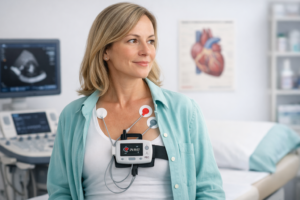
If symptoms come and go, Holter monitoring records your rhythm for longer, increasing the chance of capturing the episode that worries you.
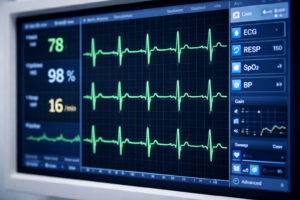
Start with the decision pages built around real patient journeys — symptoms first, then the most sensible test.
Here’s the decision logic most clinicians use. It’s simple, and it reduces “test hopping”.
See what happens at the appointment, what an ECG can/can’t show, and booking: ECG test
Learn how the monitor is fitted, recording duration options, and how results guide next steps: Holter monitor
For structural heart questions (valves, pumping, murmurs), move to echo guidance: What is an ultrasound echo? and the comparison: Echo vs ECG.
This is the “low cognitive load” pathway: symptom → best first test → second test only if it changes management.
Palpitations, dizziness, skipped beats, chest fluttering, or anxiety about rhythm are usually rhythm-led questions. If breathlessness, murmur, ankle swelling or reduced exercise tolerance are central, echo may be needed too.
ECG answers “what is happening now?” Holter answers “what happens across a day (or longer)?” The point is to capture the right data, not to repeat short tests that miss intermittent symptoms.
If rhythm findings suggest a structural cause (or symptoms suggest it from the start), echo becomes the correct next step. Echo is imaging — it answers different questions than monitoring.
Monitoring is brilliant for rhythm. But if your main concern is the heart’s structure and pumping function, the “next best test” is often an ultrasound echo.
“Are my valves working normally?” “Is the heart pumping strongly?” “Is there fluid around the heart?” “What is my ejection fraction?” If those are your worries, start here: What is an ultrasound echo?.
If you’re choosing between tests right now (and don’t want to overbook), use: Echo vs ECG.
The practical questions people ask right before booking.