
Book Scan
General Medical · Diagnostic Scan

Private Hernia Ultrasound-Scan in London

A precise diagnostic assessment to confirm, locate, and characterise hernias of the groin, abdomen, and abdominal wall. Ideal for investigating a suspected inguinal, femoral, umbilical, or incisional hernia. Same-day appointments at our Harley Street clinic.

CQC Registered Good No GP Referral Needed Same-Day Report

Not sure if this is the right scan? Call our clinical team for guidance.

What is a Hernia Ultrasound-Scan?

A hernia ultrasound-scan is a safe, non-invasive diagnostic procedure that uses high-frequency sound waves to identify and characterise hernias — protrusions of tissue or organs through a weakness in the surrounding muscle or connective tissue wall.

Ultrasound is the preferred first-line imaging investigation for suspected hernias of the groin and abdominal wall. It is highly accurate, dynamic (meaning it can be performed whilst the patient coughs or bears down to provoke the hernia), and completely free of radiation. It can confirm the presence of a hernia, identify its type, assess its contents, and determine whether it is reducible — all information that is critical for surgical planning.

At Sonoworld, our consultant sonographers use high-resolution GE ultrasound equipment and a dynamic scanning technique to ensure even small or intermittent hernias are not missed.

Common clinical goals

  • Confirm the presence and type of hernia (inguinal, femoral, umbilical, or incisional).
  • Assess hernia contents (fat, bowel) and determine reducibility.
  • Identify complications such as incarceration or strangulation.
  • Provide pre-operative information to support surgical planning.

Types of Hernia We Assess

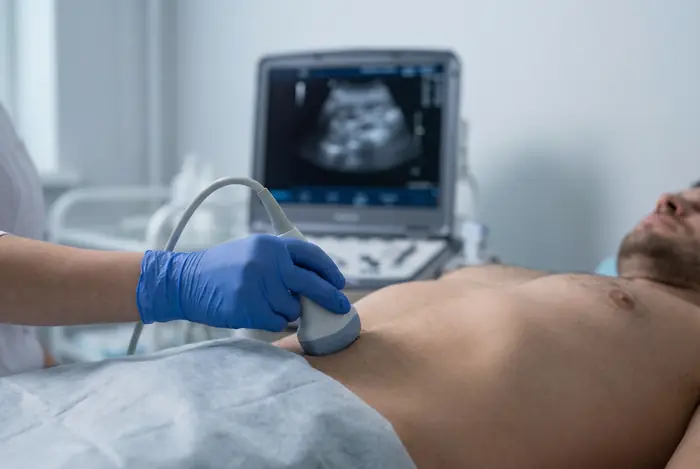
Ultrasound scan of an inguinal hernia in the groin
Groin Hernias

Inguinal & Femoral Hernias

Inguinal hernias are the most common type, occurring when tissue protrudes through the inguinal canal in the groin. Femoral hernias occur just below the groin crease and carry a higher risk of strangulation. Both are assessed dynamically — the patient is asked to cough or bear down to make the hernia visible during the scan.
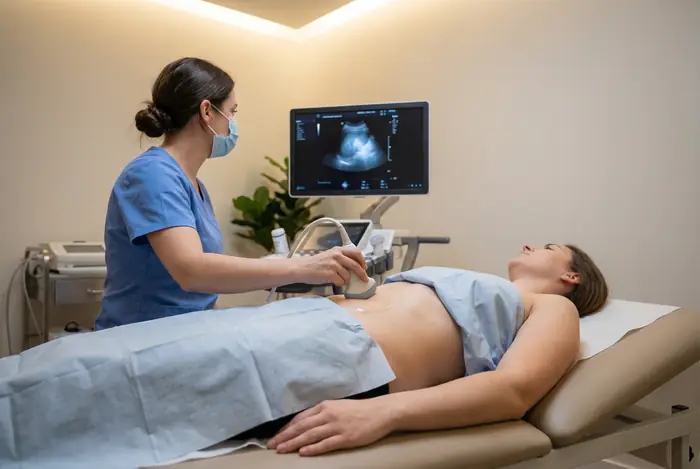
Ultrasound scan of an umbilical hernia
Abdominal Wall

Umbilical & Epigastric Hernias

Umbilical hernias occur at the navel and are common in adults, particularly following pregnancy or significant weight gain. Epigastric hernias develop in the midline of the upper abdomen. Ultrasound accurately identifies the defect size, hernia sac contents, and reducibility — all key factors in surgical decision-making.

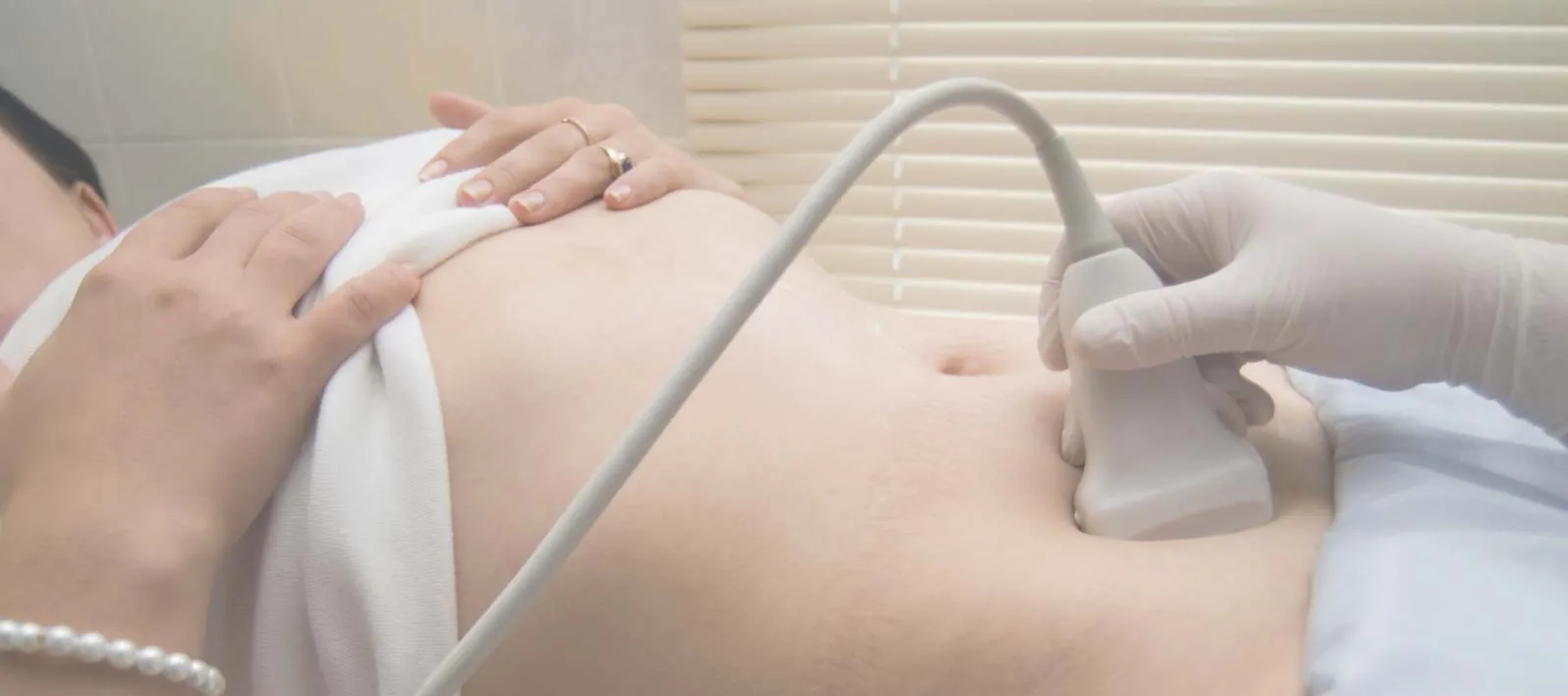
Ultrasound scan of an incisional hernia
Post-Surgical & Sports

Incisional & Sports Hernias

Incisional hernias develop at the site of a previous surgical scar where the abdominal wall has weakened. Sports hernias (athletic pubalgia) involve a tear or weakness in the posterior inguinal wall and are common in athletes. Dynamic ultrasound is particularly valuable in confirming these diagnoses.

When should you book a hernia scan?

A hernia scan is recommended if you have noticed a lump or bulge in your groin, abdomen, or at the site of a previous scar, particularly if it appears when you stand, cough, or strain.

Common symptoms investigated:

  • A visible or palpable lump in the groin, navel, or abdominal wall that appears on standing or straining.
  • Groin or abdominal pain or discomfort, particularly when bending, coughing, or lifting.
  • A dragging or heavy sensation in the groin or lower abdomen.
  • Chronic groin pain in athletes (suspected sports hernia or athletic pubalgia).

Preparation

A hernia ultrasound requires minimal preparation, making it easy to attend at short notice.

1
No fasting required You can eat and drink normally before your appointment. There are no dietary restrictions for a hernia scan.
2
Wear comfortable, loose clothing The sonographer will need access to the groin and/or abdomen. Loose-fitting trousers or shorts are ideal. You will be provided with a modesty sheet during the examination.
3
Be prepared to stand and cough The dynamic nature of the scan means you will be asked to stand and perform a Valsalva manoeuvre (bearing down or coughing) to provoke the hernia. This is a standard and important part of the examination.

How Your Appointment Works

1
Arrival & History You will be welcomed at our Harley Street clinic. The sonographer will take a brief clinical history, noting the location of your symptoms, how long you have had them, and any relevant surgical history.
2
The Scan Warm gel is applied to the area of concern. The scan is performed both lying down and standing, and you will be asked to cough or bear down to provoke the hernia. This dynamic technique ensures even small or intermittent hernias are identified. The scan takes approximately 20 minutes.
3
Immediate Feedback The consultant sonographer will explain the findings to you clearly during the appointment, confirming whether a hernia is present, its type, and its clinical significance.
4
Written Report A comprehensive medical report and digital images are provided on the same day, ready to share with your GP or surgeon to support your onward management.

Transparent Pricing

Our private hernia scan provides rapid access to expert diagnostic imaging with no hidden costs and no GP referral required.

  • 20-minute appointment with a consultant sonographer.
  • Dynamic assessment — performed lying and standing with Valsalva manoeuvre.
  • Assessment of hernia type, contents, size, and reducibility.
  • Verbal explanation of findings on the day.
  • Comprehensive written medical report and digital images within 24 hours.
Private Hernia Scan
£235
All-inclusive fee

No hidden costs. No GP referral required.

Book Your Scan Online

Concerned about a lump or swelling?

If you are unsure whether your lump is a hernia or something else, our lumps and bumps scan can assess any superficial soft tissue swelling anywhere on the body.

View Lumps & Bumps Scan →

Frequently Asked Questions

Do I need a GP referral for a hernia scan?

No, you do not need a GP referral to book a private hernia scan at Sonoworld. You can self-refer and book directly online or by phone. If you have been referred by your GP or a surgeon, please bring the referral letter as it helps the sonographer focus the examination on the area of clinical concern.

What is a dynamic hernia scan?

A dynamic hernia scan is performed both at rest and whilst the patient performs a Valsalva manoeuvre — bearing down or coughing to increase intra-abdominal pressure. This is essential because many hernias are only visible or palpable when intra-abdominal pressure is raised. The dynamic technique significantly increases the sensitivity of the scan and reduces the chance of a false-negative result.

Can ultrasound miss a hernia?

Ultrasound is highly sensitive for groin and abdominal wall hernias when performed dynamically by an experienced sonographer. However, in patients with a high BMI or significant bowel gas, image quality can be reduced. If clinical suspicion remains high despite a normal ultrasound, an MRI of the groin may be recommended as a complementary investigation, particularly for suspected sports hernias.

Is the scan painful?

The scan itself is painless. Some patients with a tender or inflamed hernia may experience mild discomfort when the transducer is applied over the affected area, but the examination is performed gently and the sonographer will always work within your comfort level.

How quickly will I get my results?

Your consultant sonographer will explain the findings to you immediately after the scan. A comprehensive written report and digital images will be provided on the same day, ready to share with your GP or surgeon to support your onward management and surgical planning.

Get a Definitive Diagnosis Today

Book your private hernia ultrasound scan in Harley Street.

crossmenu
Not sure which scan you need?
Sono AISonoworld Scan Advisor
Tap to Call