The purpose of an arterial ultrasound scan is to create detailed images of the blood vessels, specifically the arteries, using high-frequency sound waves. These images are used to identify problems such as blockages, plaque build-up, blood clots, aneurysms, and other issues that may affect blood flow. The procedure is also known as an arterial duplex ultrasound, or simply an arterial ultrasound.
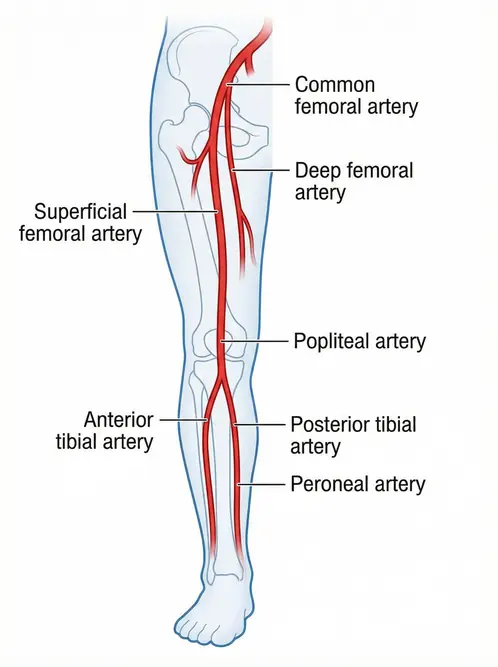
It is often used to evaluate the blood flow in the legs, arms, neck, and other parts of the body and it is also commonly used to monitor treatment of the vascular issues such as blood clots, narrowing or blocked vessels.

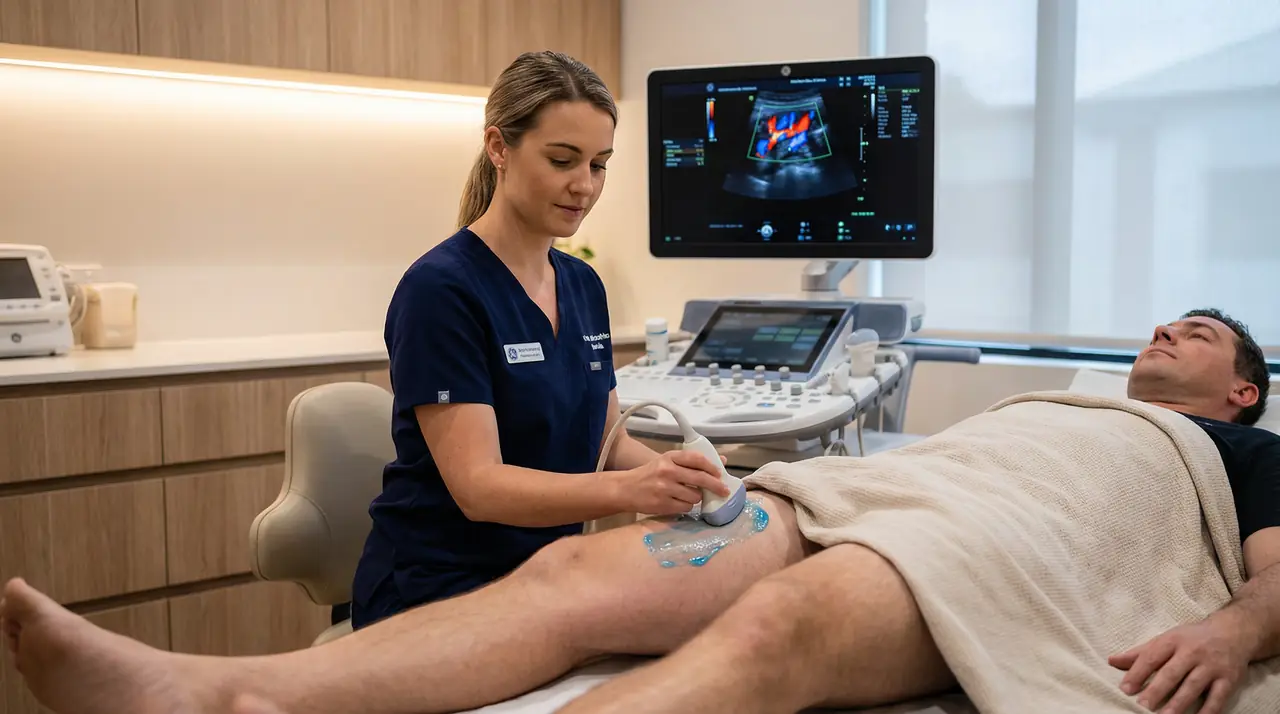
Upon your arrival, our sonographer will explain the ultrasound scan procedure. You will need to expose your legs and a small amount of gel will be placed on your skin. The sonographer will follow the length of your leg veins and from time to time you will feel a small amount of pressure.
Vascular ultrasound is carried out in order to monitor blood flow to organs and tissues throughout the body, locate and identify blockages and abnormalities like blood clots, plaque or emboli.
Vascular ultrasound can also help to identify areas of an abnormal widening of blood vessels (an aneurysm) that, if left untreated, can lead to serious consequences.
A Doppler ultrasound study may be part of a vascular ultrasound examination. Doppler is a special ultrasound technique that evaluates the speed and volume of blood as it flows through a blood vessel, including the body's major arteries and veins in the abdomen, arms, legs, and neck. It can help to diagnose blockages to blood flow (such as clots) narrowing of vessels (possibly caused by plaque) and tumours and congenital malformation.
As the images are captured in real-time, they can help the sonographer monitor the blood flow to organs and tissues throughout the body.

Ultrasound imaging is a medical diagnostic technique where sound waves are being used to image various parts of the body.
Other terms for ultrasound imaging are sonograms, US and sonography.
Ultrasound is widely used these days as it is painless and safe for adults, children and foetuses. There are no side effects such as the ones associated with radiation.
During the ultrasound scan, the sonographer rests a small probe over the skin. This probe produces sound waves, i.e. pulsations, that travel through the tissues. Some sound waves are being reflected back to the transducer, and the computer analyses the returning echoes and produces the image on the screen. It is the same principle as the sonar the navy uses.
Ultrasound is being used to image mostly solid organs such as liver, kidneys, uterus and ovaries, muscles and blood vessels and babies in the womb.
It has, however, limited value in organs such as lungs, bone, stomach and bowel/colon.
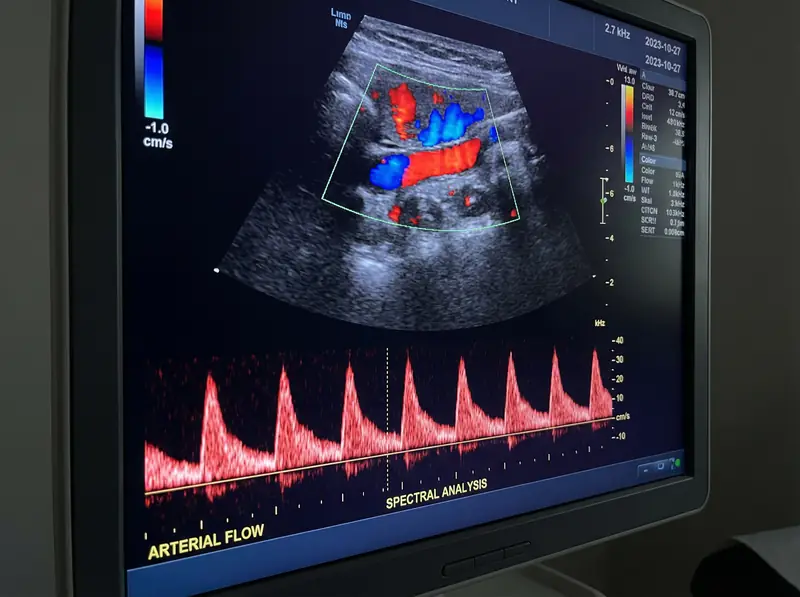
Ultrasound images are black and white but colour Doppler is being used to evaluate organ and blood vessel blood flow and this is what the red and blue colours on the screen are.
A Doppler ultrasound scan is a specialized ultrasound technique that uses high-frequency sound waves to create images of blood flow through the body's vessels. It is also known as a Doppler ultrasound, Doppler study, or simply Doppler. The term “Doppler” refers to the use of the Doppler effect, which is a phenomenon in which the frequency of a wave changes as the source and observer move relative to each other. In medical ultrasound, the Doppler effect is used to measure the speed and direction of blood flow.
During a Doppler ultrasound scan, a handheld transducer is placed on the skin over the area of interest, typically a limb or an artery in the neck. The transducer emits high-frequency sound waves that travel through the skin and into the body, where they bounce off moving blood cells. The echoes are then picked up by the transducer and converted into images that are displayed on a monitor. These images show the direction and speed of blood flow through the vessels.
Doppler ultrasound scans can be used to evaluate blood flow in the legs, arms, and neck, as well as in other parts of the body. It can help to identify blockages, narrowed blood vessels, aneurysms, blood clots and other issues that may affect blood flow. It is also commonly used to evaluate blood flow before and after angioplasty, monitor blood clots and assess the blood flow in the foetal heart during pregnancy.
Doppler ultrasound is a non-invasive, painless and safe procedure, similar to regular ultrasound, and it usually takes around 30-60 minutes to complete.
In our ultrasound scan clinic in Harley Street, you can book a private abdominal scan without the need for a doctor's referral.