Home ›
Blog ›
General Health ›
Thyroid nodule follow-up
Thyroid Nodule Follow-Up: Intervals and What Changes
Thyroid nodule follow-up depends on the nodule's ultrasound score, from U1 to U5, and
on any biopsy result. Under the 2026 UK consensus, a benign-looking U2 nodule without
symptoms can often be discharged. Others are rescanned, usually no sooner than 12
months, often for at least two years. Growth, new features or new symptoms change
the plan.
Written by Sonoworld Clinical Team ·
Reviewed by Daniela Stan, Consultant Ultrasound Practitioner ·
Updated 26 November 2026
When a thyroid nodule needs prompt attention
- Call 999 if you have difficulty breathing.
- See your GP promptly, rather than waiting for your next scan, if a nodule or neck lump is growing quickly, feels hard or fixed, or comes with hoarseness, difficulty swallowing, or new lumps in your neck.
- NICE guidance, cited in the 2026 UK consensus, supports urgent referral for an unexplained thyroid lump.
How Is a Thyroid Nodule Scored on Ultrasound?
In the UK, thyroid nodules are given a U score from the British Thyroid Association
(BTA) system, in use since 2014. U1 is normal thyroid, U2 is benign-looking, U3 is
indeterminate, U4 is suspicious and U5 looks malignant. The score, the size of the
nodule and your symptoms decide whether you need a needle biopsy (FNAC, fine needle
aspiration cytology) and how the nodule is followed up.
Thyroid nodules are very common: the 2026 consensus says they can be found in up to
68% of people on ultrasound, and most are benign. If you have not had a thyroid scan
before, our guide to
thyroid ultrasound and what to expect
explains the first appointment.
How Often Should a Thyroid Nodule Be Rescanned?
For benign or low-risk nodules followed without treatment, the 2026 BTA and BAETS
consensus recommends a repeat ultrasound at 12 months, not earlier, because most
nodules, benign and malignant, stay stable. Some nodules need no follow-up at all.
The plan depends on the U score, the size and any biopsy result:
| Nodule | Usual follow-up under the 2026 consensus |
|---|
| U2 (benign-looking), no pressure symptoms | May be discharged. If followed up, repeat ultrasound at 12 months |
| Under 1 cm, no symptoms or suspicious clinical features | May be discharged |
| U3 over 1 cm with a benign biopsy (Thy2) | Discharge if stable at 12 months |
| U3 1 to 2 cm, no biopsy | Biopsy or interval ultrasound, depending on local policy; if not biopsied, at least 2 years of ultrasound follow-up |
| U3 over 2 cm | Usually considered for biopsy |
| U4 or U5 under 1 cm, no biopsy | At least 2 years of ultrasound follow-up before discharge is considered |
| U4 or U5 over 1 cm | Usually considered for biopsy |
| Indeterminate or suspicious biopsy (Thy3a, Thy3f, Thy4, Thy5) managed without surgery | Yearly ultrasound for at least 5 years |
Your endocrinologist, surgeon or GP sets your own plan, and local policies vary for
some groups.
What Change Prompts Another Biopsy?
The 2026 consensus recommends a repeat biopsy of a U3 nodule over 1 cm with a benign
result if any of these happen:
- the nodule grows between scans;
- its ultrasound appearance changes;
- lymph nodes on the same side of the neck become enlarged; or
- a vocal cord stops moving normally.
More generally, it says follow-up should take account of new symptoms, lymph nodes and
any progression on imaging.
The consensus does not set a single number for how much growth matters, so the
specialist looking after you judges each change in context.
Who Needs Closer Follow-Up?
The consensus lists clinical features that raise the risk: a strong family history of
thyroid cancer, head and neck radiotherapy in childhood or young adulthood, and an
isolated nodule in a man under 35. If any of these apply, tell the doctor planning your
follow-up. Our guide to
when a neck lump needs checking
covers other warning signs.
Why Do Your Previous Scans Matter?
Follow-up is about change, and change can only be judged against an earlier scan. A
measurement on its own says how big a nodule is today; comparing it with previous
measurements and images shows whether it has grown or its appearance has changed. Bring
your previous reports, and images if you have them, to every follow-up scan.
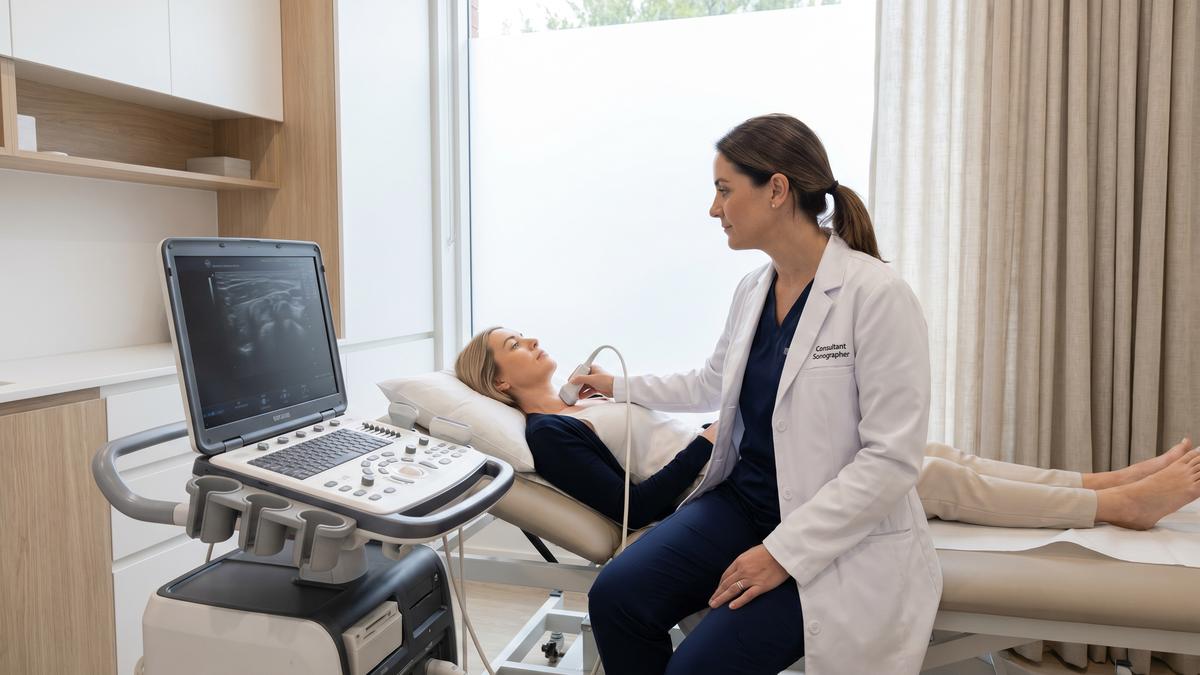
How Do We Report Thyroid Follow-Up Scans?
From our thyroid and neck clinic
- U score on every report: each nodule is classified with the BTA U1 to U5 system.
- Intervals from the 2026 consensus: any follow-up we recommend follows the 2026 BTA and BAETS consensus on intervals and on what counts as growth.
- No biopsies here: we do not perform FNAC. When a biopsy is indicated, the report recommends referral so it can be arranged.
- Previous scans: we ask you to bring your previous reports and images so we can compare.
This describes how Sonoworld reports follow-up scans. Your endocrinologist, surgeon or
GP decides your own follow-up plan.
Frequently Asked Questions
How often should a thyroid nodule be checked?
It depends on the U score, the size and any biopsy result. Under the 2026 UK consensus, benign or low-risk nodules that are followed up have a repeat ultrasound at 12 months, not earlier. Many U2 nodules can be discharged. Some groups need at least two years of follow-up, and some indeterminate results need yearly scans for at least five years.
Can I be discharged from thyroid nodule follow-up?
Often, yes. The 2026 consensus says a benign-looking U2 nodule without pressure symptoms may be discharged, as may small nodules under 1 cm with no symptoms or suspicious features. A U3 nodule over 1 cm with a benign biopsy can be discharged if it is stable at 12 months. Your specialist or GP decides when follow-up can stop.
What counts as thyroid nodule growth?
Growth means a nodule has become larger when its measurements are compared with an earlier scan. The 2026 consensus does not set one number for growth that matters; your specialist judges the change alongside the U score, the ultrasound appearance and any symptoms. That is why bringing your previous reports and images to each follow-up scan helps.
Do you do thyroid biopsies?
No. We do not perform fine needle aspiration cytology (FNAC). If the scan shows that a biopsy is indicated under the national guidance, the report recommends referral so it can be arranged, usually through your GP or the specialist looking after you. You get instant verbal results at the appointment and the written report within 24 hours.
Is a U3 thyroid nodule cancer?
U3 means indeterminate: the ultrasound features are not clearly benign or clearly suspicious. Most thyroid nodules are benign. Depending on its size, a U3 nodule may be biopsied or followed with ultrasound under the 2026 consensus. A U3 score is a reason for a clear plan, not a diagnosis of cancer.
Can I have my follow-up scan privately and share it with my specialist?
Yes. You do not need a GP referral for a thyroid and neck scan, and the written report and images, sent within 24 hours, can be shared with your GP, endocrinologist or surgeon. Bring your previous reports and images so we can compare. Your specialist decides how the result fits your follow-up plan.
Book a thyroid and neck ultrasound
£235, no GP referral needed. Instant verbal results; written report within 24 hours. Please bring your previous thyroid scan reports and images.
Book a thyroid scan
29 Weymouth Street, London W1G 7DB · 020 3633 4902 · What happens at your visit
Sources
This guide is general information and does not replace individual medical advice.
Sonoworld Diagnostic Services Limited is registered with the Care Quality Commission:
see our CQC registration.