Book Scan
Prevention
Home/Blog/Prevention/Family History Heart Screening

Family History Heart Screening: Do You Need an Echocardiogram?

If a close relative has been diagnosed with a heart condition — or died suddenly from a cardiac event — your own risk may be significantly elevated. Family history heart screening with a diagnostic echocardiogram can identify inherited cardiac conditions before symptoms develop, enabling early intervention that is often life-saving.

Learning that heart disease runs in your family can be deeply unsettling. Whether you have just discovered a parent's diagnosis, or you have been carrying the weight of a family history of sudden cardiac death for years, the uncertainty about your own heart health is a heavy burden. You may have been told to "keep an eye on things" by your GP, or found yourself waiting months for an NHS cardiology appointment — all while wondering whether your heart is structurally sound.

At Sonoworld Diagnostic Services, our consultant sonographers bring over 20 years of NHS and private clinical experience to every cardiac assessment. We provide same-day echocardiogram appointments in London without the need for a GP referral, delivering detailed written reports within 24 hours. Every assessment is conducted in strict accordance with NICE CG180, ESC 2023 Cardiomyopathy Guidelines, and ESC 2021 Prevention Guidelines.

CQC Registered No GP Referral Needed Same-Day Appointments 24-Hour Written Report

Secure online booking · Results within 24 hours · Insurance accepted (AXA, Healix, WPA)

From £290Transparent pricing
No Radiation100% safe ultrasound

What Does "Family History of Heart Disease" Mean Clinically?

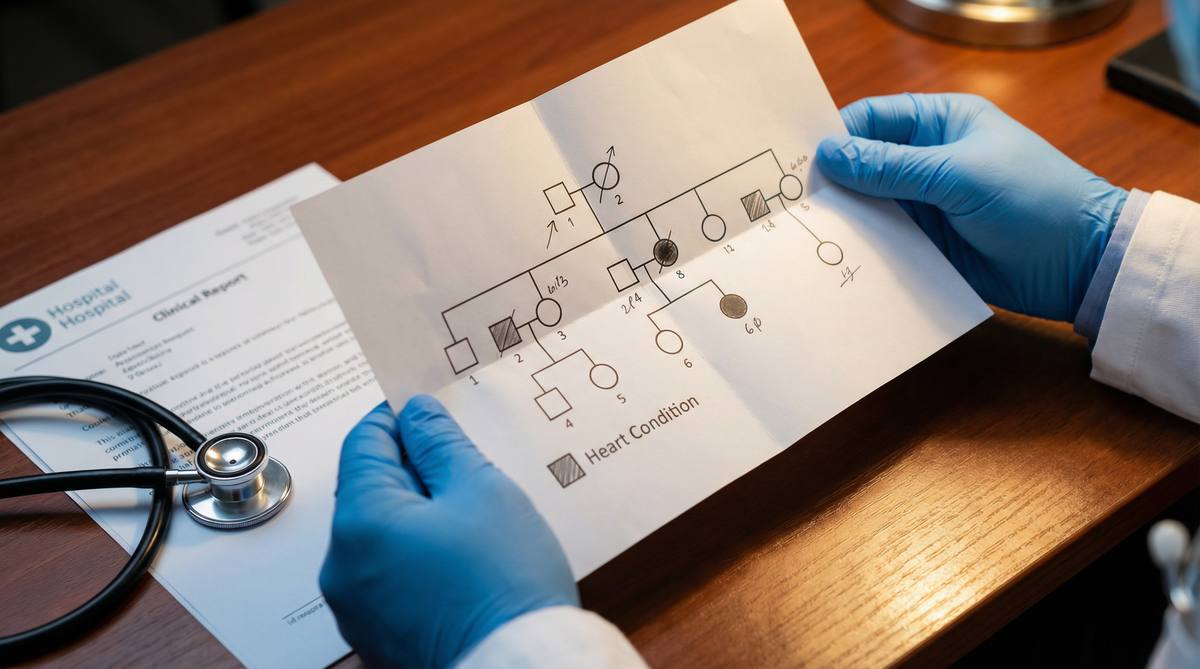
In clinical practice, a significant family history of heart disease is defined as a first-degree relative — a parent, sibling, or child — who has been diagnosed with a cardiac condition or who died suddenly from a cardiac event. The degree of risk depends on the specific condition, the age at which it occurred, and the number of affected relatives.

The landmark INTERHEART study — one of the largest cardiovascular epidemiology studies ever conducted, with over 11,000 citations — identified family history as one of nine independent risk factors accounting for more than 90% of global myocardial infarction risk.1 Clinically, "premature" cardiovascular disease is defined as a heart attack or coronary artery disease diagnosis in a male first-degree relative under the age of 55, or a female first-degree relative under 65. Individuals with this family history carry a 2–3 times increased risk of developing coronary artery disease themselves.

Premature Coronary Artery Disease

Beyond the absolute risk increase, a 2025 study in Circulation demonstrated that adding a 12-SNP polygenic risk score to the PREVENT clinical risk equation increased predictive accuracy (Harrell's C statistic from 0.747 to 0.757, p<0.0001), with a Net Reclassification Improvement of 10.7 in borderline-risk individuals — directly influencing statin initiation decisions.8 This means genetic risk information now has a measurable clinical impact on preventive treatment thresholds.

Inherited Cardiac Conditions (ICCs)

Beyond premature coronary artery disease, a separate and critically important category of risk comes from inherited cardiac conditions — structural or electrical abnormalities of the heart that are passed directly from parent to child through autosomal dominant inheritance. These include hypertrophic cardiomyopathy (HCM), dilated cardiomyopathy (DCM), arrhythmogenic cardiomyopathy (ARVC), Long QT syndrome, Brugada syndrome, and familial hypercholesterolaemia (FH). Unlike lifestyle-related heart disease, these conditions can affect young, otherwise healthy individuals and carry a risk of sudden cardiac death (SCD).

⚠ Red Flag — Seek Assessment Without Delay

If a first-degree relative (parent, sibling, or child) suffered a sudden unexplained death under the age of 40, or was diagnosed with an inherited cardiac condition such as HCM, Long QT syndrome, or Brugada syndrome, you should seek a cardiac screening assessment immediately. These conditions are autosomal dominant — each first-degree relative carries a 50% chance of inheriting the causative gene variant. Do not wait for symptoms to develop. The majority of individuals with inherited cardiac conditions are asymptomatic until a potentially fatal arrhythmia or structural event occurs.

Which Heart Conditions Run in Families?

The following six inherited cardiac conditions are the most clinically significant from a cardiac family screening perspective. Each carries a defined inheritance pattern and a measurable risk to first-degree relatives — all are detectable or monitorable using echocardiography.

Autosomal Dominant · 1 in 500

Hypertrophic Cardiomyopathy (HCM)

The most common inherited heart muscle disease in the UK. The left ventricular wall becomes abnormally thickened (hypertrophied), impairing diastolic filling and, in 70% of cases, causing left ventricular outflow tract obstruction (LVOTO). HCM is the leading cause of sudden cardiac death in young athletes. First-degree relatives have a 50% chance of inheriting the causative gene variant.3 Learn more about cardiomyopathy types and how they are inherited.

Autosomal Dominant · 30–50% Genetic

Dilated Cardiomyopathy (DCM)

The left ventricle becomes enlarged (dilated) and the myocardium weakens, reducing the ejection fraction and the heart's ability to pump blood effectively. Approximately 30–50% of DCM cases have a genetic basis, with over 50 causative genes identified. Genetic screening of first-degree relatives identifies preclinical disease in a significant proportion of asymptomatic family members. Understand your ejection fraction and what it means.

Autosomal Dominant

Arrhythmogenic Cardiomyopathy (ARVC)

The right ventricular muscle is progressively replaced by fibrous or fatty tissue (fibrofatty replacement), creating an arrhythmogenic substrate for life-threatening ventricular arrhythmias. ARVC is responsible for a disproportionate number of sudden cardiac deaths in young people and athletes. Echocardiography assesses right ventricular dilation, reduced RV function, and RV aneurysm formation.

Autosomal Dominant

Long QT Syndrome & Brugada Syndrome

These are inherited channelopathies — electrical disorders of the heart in which the cardiac structure appears normal on echocardiogram, but the ion channel function is abnormal. Long QT syndrome prolongs ventricular repolarisation, predisposing to Torsades de Pointes. Brugada syndrome causes a characteristic coved ST-elevation pattern on ECG and a risk of ventricular fibrillation, particularly during sleep or fever. ECG is the primary diagnostic tool; echocardiogram excludes structural disease.

Autosomal Dominant · 1 in 250

Familial Hypercholesterolaemia (FH)

FH affects approximately 1 in 250 people in the UK, yet the vast majority remain undiagnosed (NICE CG71). It causes markedly elevated LDL cholesterol from birth, dramatically accelerating the development of premature coronary artery disease. A 2025 study of 1,886 FH patients found that those with a high polygenic risk score had a 1.92-fold increased risk of cardiovascular events (HR 1.92, 95% CI 1.55–2.37, p<0.0001).4

20–30% Familial

Bicuspid Aortic Valve (BAV)

The most common congenital heart defect, affecting 1–2% of the general population. However, first-degree relatives of a BAV patient have a 9.1% prevalence — nearly five times higher than the general population.5 BAV is associated with progressive aortic root dilation and an increased risk of aortic dissection, making screening echocardiography essential for at-risk family members. Read more about aortic valve disease and its diagnosis.

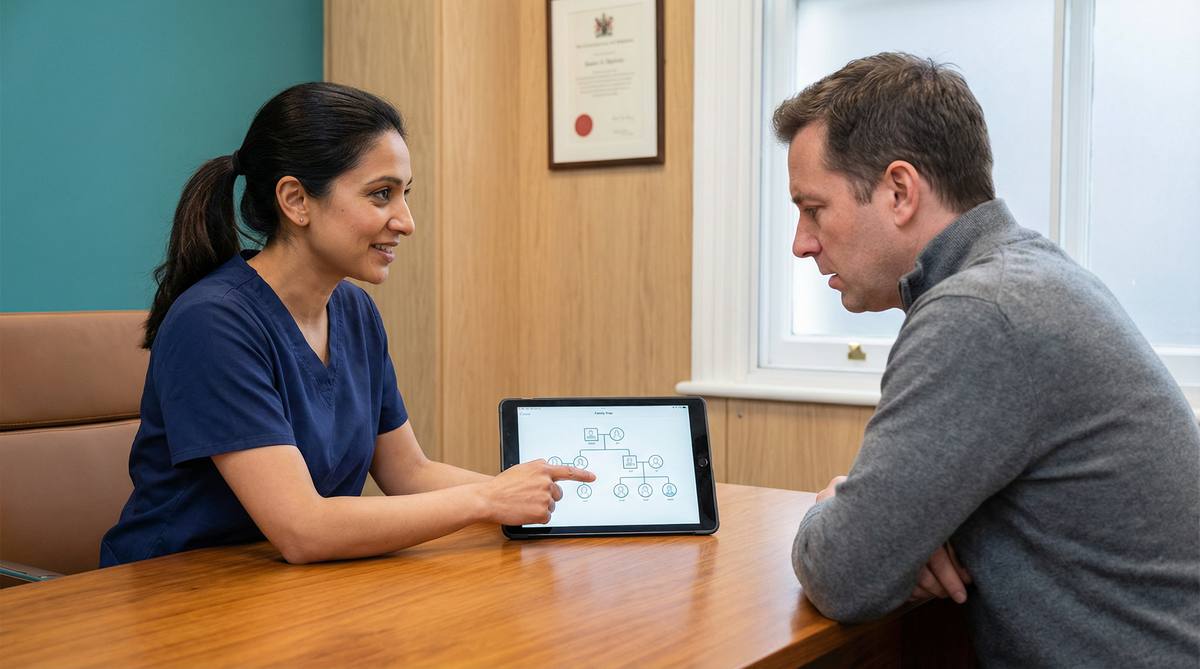
Doctor discussing inherited cardiac condition genetic results with a patient and family member

Who Should Get a Cardiac Screening Echocardiogram?

The following criteria, drawn from NICE CG180, ESC 2023 Cardiomyopathy Guidelines, and ESC 2021 Prevention Guidelines, define who should be offered a cardiac screening echocardiogram based on their family history. If you meet any of these criteria, you can book directly at Sonoworld without a GP referral.

Condition in Family Who Should Be Screened Age to Start Frequency
Hypertrophic Cardiomyopathy (HCM) All first-degree relatives (parents, siblings, children) From age 10–12 (or earlier if symptomatic) Every 1–5 years depending on age and findings
Dilated Cardiomyopathy (DCM) All first-degree relatives From age 10 (or at time of proband diagnosis) Every 3–5 years if initially normal
Arrhythmogenic Cardiomyopathy (ARVC) All first-degree relatives From age 10–12 Every 2–3 years
Sudden Cardiac Death under 40 All first-degree relatives; consider second-degree relatives Immediately upon discovery of family history Specialist-guided, with genetic testing
Bicuspid Aortic Valve (BAV) All first-degree relatives Any age; prioritise adults over 30 Every 3–5 years if aortic root normal
Premature CAD (men <55, women <65) First-degree relatives from age 20 From age 20 (earlier if additional risk factors present) Every 3–5 years with cardiovascular risk assessment
Clinical Evidence — BEAT-IT Programme (Abela et al., 2023, European Journal of Preventive Cardiology): The BEAT-IT national cardiac screening programme enrolled 2,708 adolescents aged 14–16. When families of those with a preclinical or clinical cardiac diagnosis were offered screening, a combined clinical and genetic evaluation identified an inherited cardiac condition in 9.9% of screened family members who had no symptoms at the time of assessment.3 A regression model incorporating family history of SCD, relationship to the proband, and an abnormal ECG predicted diagnosis or need for surveillance with 92.1% accuracy. This demonstrates the critical importance of proactive cardiac family screening — the majority of those identified would not have been diagnosed until a potentially fatal cardiac event.

What Does the Echocardiogram Look For?

An echocardiogram — an ultrasound-scan of the heart — is the first-line investigation recommended by NICE and the ESC for all suspected inherited cardiac conditions. It provides a real-time, radiation-free assessment of the heart's structure and function, enabling our consultant sonographers to identify the specific structural changes associated with each inherited condition.

Key Structural Measurements

  • LV Wall Thickness: A maximum wall thickness ≥15mm (or ≥13mm with a positive family history) is diagnostic of HCM. This is the single most important measurement in HCM family screening.
  • LV Dimensions & Ejection Fraction (LVEF): An enlarged left ventricular end-diastolic diameter (LVEDD >58mm in men, >52mm in women) combined with a reduced ejection fraction is the hallmark of DCM. Learn more about what your ejection fraction means.
  • Right Ventricular Structure: RV dilation, reduced RV function, and RV aneurysm are the key echocardiographic features of ARVC, assessed using multiple imaging planes and RV-focused views.
  • Aortic Root Diameter: An aortic root >40mm triggers specialist referral in Marfan syndrome and BAV-related aortopathy. We measure the aortic root at the annulus, sinuses of Valsalva, sinotubular junction, and ascending aorta.
  • Valve Morphology & Doppler: We identify bicuspid aortic valve anatomy, assess valve leaflet mobility, and quantify any associated aortic stenosis or regurgitation using colour-flow and continuous-wave Doppler echocardiography.
What to Expect at Your Appointment

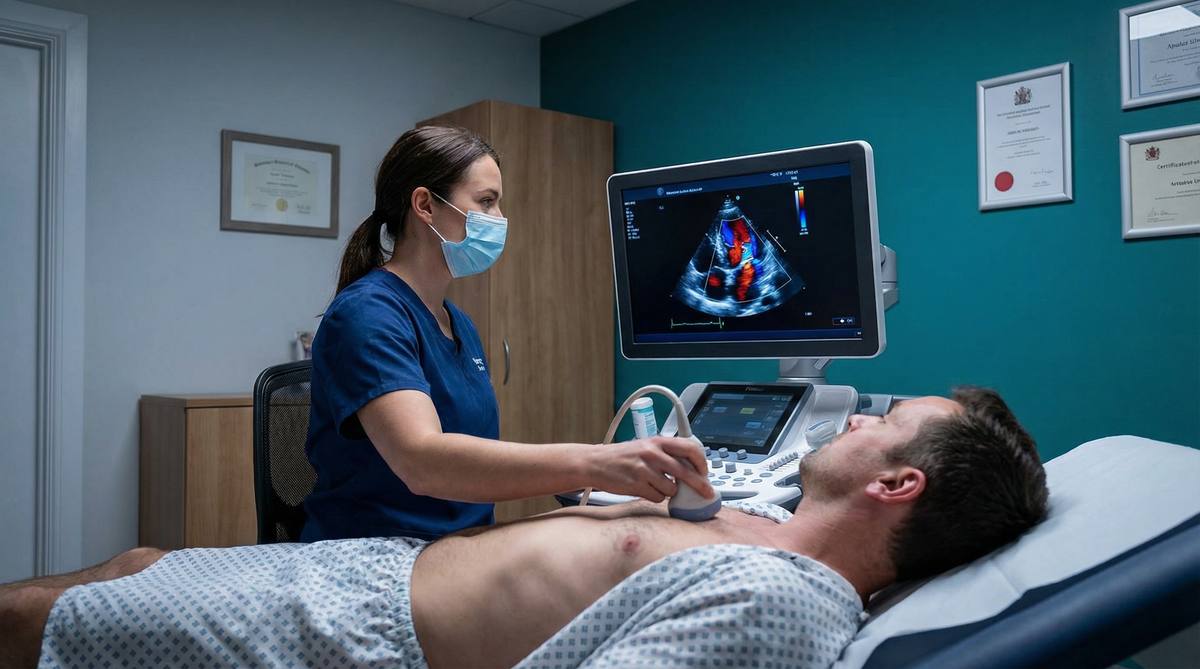
Your cardiac screening echocardiogram at Sonoworld takes approximately 45–60 minutes. You will lie on a comfortable examination couch while our consultant sonographer applies a small amount of warm gel to your chest and uses a handheld transducer to capture images of your heart from multiple angles — parasternal, apical, subcostal, and suprasternal views.

The scan is completely painless and uses no ionising radiation. You will be able to see your heart beating on the monitor in real time. Our sonographer will explain the key findings during the scan, and a full written report will be available within 24 hours — ready to share with your GP, cardiologist, or specialist inherited cardiac conditions (ICC) clinic.

No preparation is required. You can eat and drink normally beforehand, and there is no need to stop any medications prior to the scan.

Consultant sonographer performing a cardiac screening echocardiogram at Sonoworld London
Book Your Cardiac Screening Echocardiogram

Same-day appointments available · No GP referral required · From £290

Clinical Standards, Safety & Governance

Every cardiac screening echocardiogram performed at Sonoworld is conducted in accordance with the highest clinical and regulatory standards. Our practice is registered with the Care Quality Commission (CQC) and all clinical staff hold current HCPC registration. Our consultant sonographers are members of the British Medical Ultrasound Society (BMUS) and adhere to British Society of Echocardiography (BSE) minimum dataset standards for all cardiac reporting.

Guidelines Followed at Sonoworld Our family history cardiac screening assessments are conducted in strict accordance with:
  • NICE CG180 — Hypertrophic Cardiomyopathy: Diagnosis and Management
  • NICE CG71 — Familial Hypercholesterolaemia: Identification and Management
  • ESC 2023 Guidelines on Cardiomyopathies — European Society of Cardiology
  • ESC 2021 Guidelines on Cardiovascular Disease Prevention
  • British Society of Echocardiography (BSE) minimum dataset standards for echocardiographic reporting

When to See a Specialist Cardiologist

Our echocardiogram report provides a detailed structural assessment and will clearly indicate when specialist cardiology review is required. If our scan identifies features consistent with HCM, DCM, ARVC, significant aortic root dilation, or bicuspid aortic valve, we will provide a written recommendation for onward referral to a specialist inherited cardiac conditions (ICC) clinic. We can send a copy of the report directly to your GP or cardiologist to facilitate rapid onward care.

For patients with a confirmed ICC diagnosis, we also provide follow-up echocardiogram surveillance at clinically appropriate intervals in line with guideline recommendations.

Vascular Stroke Screening

For individuals with a family history of premature coronary artery disease, stroke, or familial hypercholesterolaemia, a comprehensive cardiovascular risk assessment may also include a vascular stroke screening — a carotid artery ultrasound-scan that assesses intima-media thickness and identifies early atherosclerotic plaque formation. This is particularly relevant for individuals with multiple cardiovascular risk factors or a strong family history of premature vascular disease.

Frequently Asked Questions

My parent had a heart attack — do I need a cardiac screening echocardiogram?

It depends on the age at which your parent had their heart attack. If your father had a heart attack before the age of 55, or your mother before 65, this is classified as premature coronary artery disease and represents a significant independent risk factor for your own cardiovascular health. A cardiac screening echocardiogram can assess your heart's current structural health, whilst a cardiovascular risk assessment (including blood pressure, cholesterol, and blood glucose) will quantify your overall risk. We recommend booking a private echocardiogram at Sonoworld if you are concerned about NHS waiting times.

How is hypertrophic cardiomyopathy (HCM) diagnosed on an echocardiogram?

HCM is diagnosed when the maximum left ventricular wall thickness is ≥15mm in the absence of another cause (such as hypertension or aortic stenosis). In individuals with a confirmed family history of HCM, a lower diagnostic threshold of ≥13mm is applied. Our consultant sonographers measure wall thickness at multiple points using M-mode and 2D echocardiography, and also assess the left ventricular outflow tract for obstruction (LVOTO) using continuous-wave Doppler, which is present in approximately 70% of HCM patients.

Can a normal echocardiogram rule out an inherited heart condition?

A normal echocardiogram significantly reduces the likelihood of a structural inherited cardiac condition such as HCM, DCM, or ARVC. However, it cannot exclude inherited channelopathies such as Long QT syndrome or Brugada syndrome, which require a 12-lead ECG for diagnosis. Additionally, for conditions like HCM, a normal echocardiogram in a young person (under 18) does not exclude future development of the condition — which is why repeat surveillance scans every 1–5 years are recommended for first-degree relatives of HCM probands throughout adolescence and into adulthood.

How quickly can I get a cardiac screening echocardiogram at Sonoworld?

We offer same-day and next-day appointments at our London clinic. No GP referral is required — you can book directly online or by telephone. Your written report will be available within 24 hours of your appointment, and we can send a copy directly to your GP or cardiologist upon request. We accept private health insurance from AXA, Healix, WPA, and other major providers. Pricing starts from £290 for a standard echocardiogram.

Concerned about your family history of heart disease?

Book a private cardiac screening echocardiogram at our London clinic today. No GP referral required. Same-day appointments available. Detailed written report within 24 hours.

Sonoworld Diagnostic Services · 10 Harley Street, London, W1G 9PF

References

  1. Yusuf S, et al. Effect of potentially modifiable risk factors associated with myocardial infarction in 52 countries (the INTERHEART study). The Lancet. 2004;364(9438):937–952.
  2. Abela M, et al. Family screening in cardiomyopathy — can we predict the unpredictable? European Journal of Preventive Cardiology. 2025. View source
  3. Abela M, et al. BEAT-IT national cardiac screening programme. European Journal of Preventive Cardiology. 2023.
  4. Paquette M, et al. Polygenic risk score for CAD predicts ASCVD in familial hypercholesterolaemia. Journal of Clinical Lipidology. 2025. View source
  5. Cripe L, et al. Bicuspid aortic valve is heritable. Journal of the American College of Cardiology. 2004;44(1):138–143.
  6. Silajdzija E, et al. Family Screening in Hypertrophic Cardiomyopathy. Journal of the American College of Cardiology. 2024. View source
  7. Gladding P, et al. Screening for Cardiac Disease with Genetic risk scoring, Advanced ECG, Echocardiography, Protein Biomarkers and Metabolomics. Heart, Lung and Circulation. 2021. View source
  8. Iribarren C, et al. PREVENT + Polygenic Risk Score Clinical Utility Evaluation. Circulation. 2025. View source
crossmenu
Not sure which scan you need?
Sono AISonoworld Scan Advisor
Tap to Call