Pre-operative cardiac clearance is a clinical assessment required by surgeons and anaesthetists to ensure your heart can safely withstand the physiological stress of surgery. A pre-operative echocardiogram provides the definitive structural and functional data needed to accurately stratify your perioperative risk.
Being told your elective surgery is delayed pending "cardiac clearance" is incredibly frustrating. You have likely waited months for your surgical date, only to face the prospect of waiting several more months for an NHS cardiology appointment. The uncertainty about your heart health, combined with the anxiety of a postponed operation, can be overwhelming.
At Sonoworld Diagnostic Services, our consultant sonographers bring over 20 years of NHS and private clinical experience to every cardiac assessment. We provide same-day pre-operative echocardiograms in London without the need for a GP referral, delivering detailed written reports within 24 hours. Every assessment is conducted in strict accordance with the ESC 2022 Guidelines on Cardiovascular Assessment before Non-Cardiac Surgery, ensuring your surgical team receives the exact data they need to proceed safely.
Secure online booking · Results within 24 hours · Insurance accepted (AXA, Healix, WPA)
The term "cardiac clearance" is slightly misleading. A cardiologist or sonographer does not "clear" you for surgery in the sense of guaranteeing a zero-risk procedure. Instead, a pre-operative cardiac evaluation provides a detailed, objective assessment of your perioperative cardiac risk — the likelihood of suffering a major adverse cardiac event (MACE), such as a heart attack or heart failure, during or immediately after surgery.
General anaesthesia and surgical trauma place significant physiological stress on the cardiovascular system. They increase heart rate, alter blood pressure, and increase the heart muscle's demand for oxygen. If your heart has underlying structural issues — such as an impaired ejection fraction or significant aortic stenosis — it may not be able to meet this increased demand, leading to life-threatening complications.
An echocardiogram is the definitive non-invasive tool for assessing this risk. By visualising the heart's structure and function in real time, it allows the anaesthetist to tailor their anaesthetic plan, manage your fluid balance safely during the operation, and determine whether you require post-operative high-dependency (HDU) care.
The need for an echocardiogram depends heavily on the type of surgery you are having. The ESC 2022 Guidelines classify non-cardiac surgery into three risk tiers based on the 30-day risk of cardiovascular death or myocardial infarction:
If you are experiencing active cardiac symptoms — such as new or worsening breathlessness, unexplained chest pain, severe palpitations, or fainting episodes — you must undergo a pre-operative echocardiogram regardless of the surgical risk category. These symptoms may indicate unstable coronary artery disease, decompensated heart failure, or severe valvular disease, which carry an unacceptably high perioperative risk.
The decision to request a pre-operative echocardiogram is guided by the ESC 2022 Guidelines on Cardiovascular Assessment before Non-Cardiac Surgery. Your surgeon or anaesthetist will typically request a scan if you fall into any of the following categories:
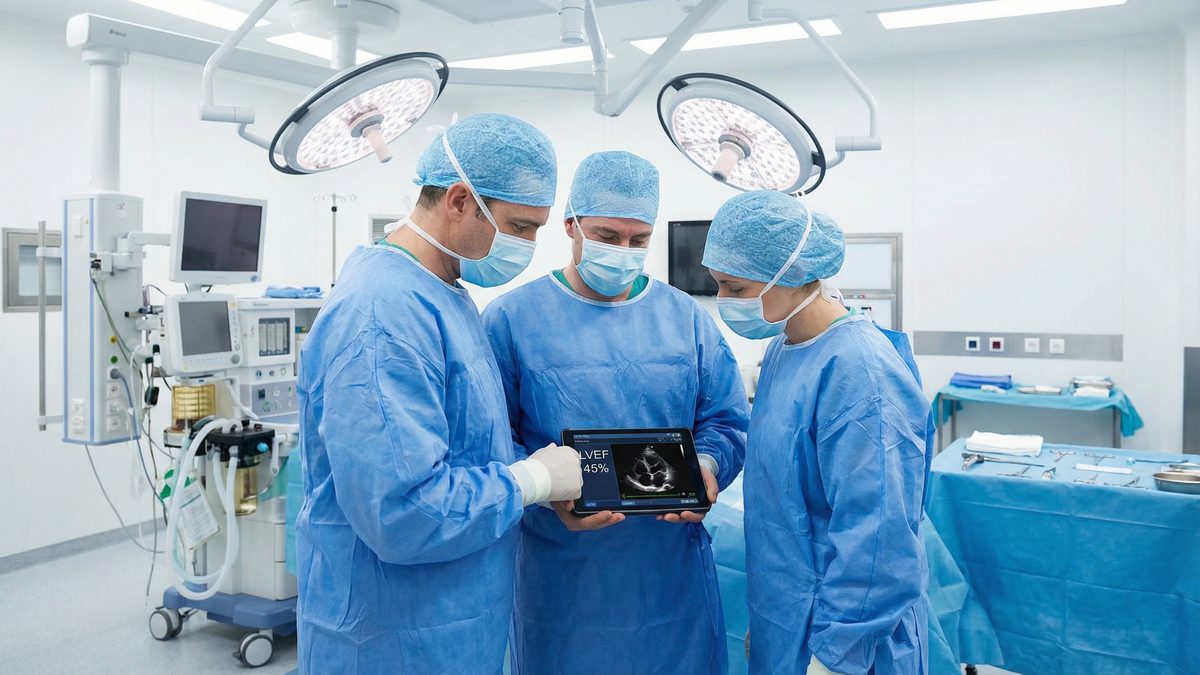
If you have a known history of heart failure, a pre-operative echocardiogram is mandatory if you have not had one in the past 12 months, or if your clinical status has changed. The anaesthetist needs an up-to-date measurement of your left ventricular ejection fraction (LVEF) to manage intraoperative fluids safely.
If a doctor has heard a new heart murmur, or if you have known valvular disease (such as aortic stenosis or mitral regurgitation) with worsening symptoms, an echocardiogram is required to quantify the severity before any elective surgery.
If you are undergoing intermediate or high-risk surgery and have poor functional capacity (defined as being unable to climb two flights of stairs without stopping, or <4 METs), an echocardiogram is recommended to assess for subclinical ventricular dysfunction.
If you have one or more clinical risk factors (as defined by the Revised Cardiac Risk Index) and are scheduled for intermediate or high-risk surgery, an echocardiogram provides critical data to refine your perioperative risk stratification.
The Revised Cardiac Risk Index (RCRI) is the most widely used clinical tool for predicting perioperative cardiac complications. It consists of six independent risk factors. If you have any of these factors, your anaesthetist is highly likely to request a pre-operative echocardiogram.
| RCRI Risk Factor | Clinical Definition |
|---|---|
| 1. High-Risk Surgery | Intraperitoneal, intrathoracic, or suprainguinal vascular surgery. |
| 2. Ischaemic Heart Disease | History of myocardial infarction, positive exercise test, current angina, or use of nitrate therapy. |
| 3. Congestive Heart Failure | History of heart failure, pulmonary oedema, or paroxysmal nocturnal dyspnoea. |
| 4. Cerebrovascular Disease | History of stroke or transient ischaemic attack (TIA). |
| 5. Insulin Therapy | Diabetes mellitus requiring pre-operative treatment with insulin. |
| 6. Renal Impairment | Pre-operative serum creatinine >2.0 mg/dL (177 μmol/L). |
A pre-operative echocardiogram provides a comprehensive, real-time assessment of your heart's structure and function. Our consultant sonographers focus specifically on the parameters that directly impact anaesthetic safety and perioperative risk.
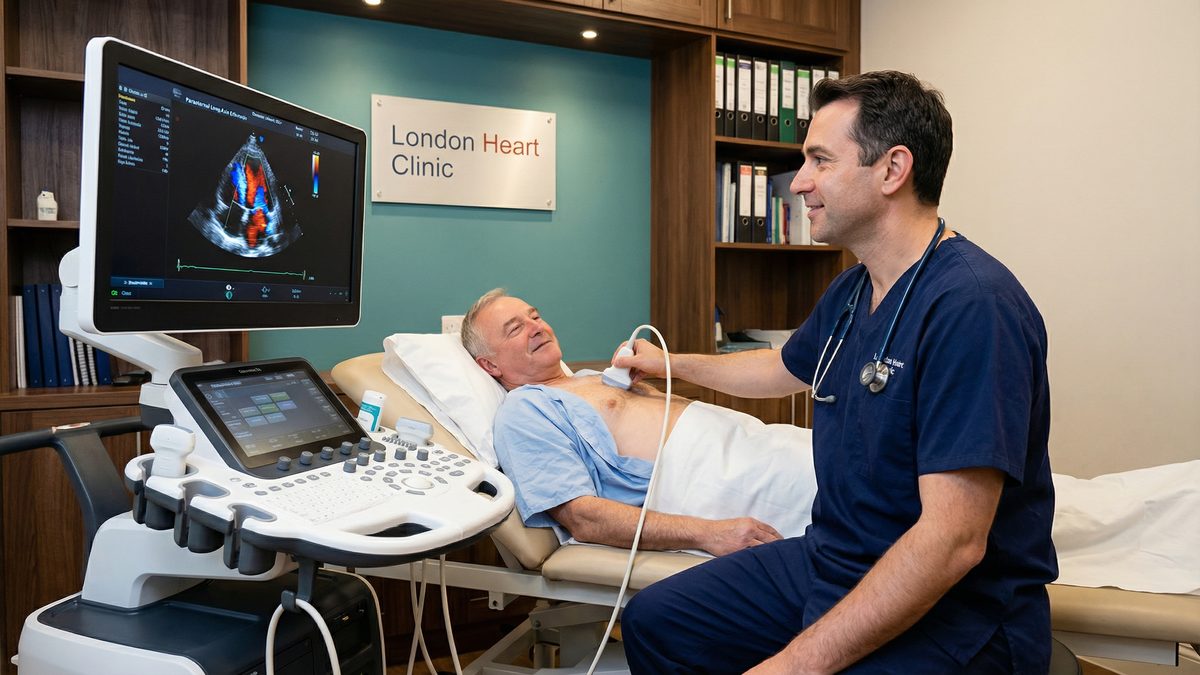
Your pre-operative echocardiogram at Sonoworld takes approximately 45 minutes. You will lie on a comfortable examination couch while our consultant sonographer applies a small amount of warm gel to your chest and uses a handheld transducer to capture images of your heart from multiple angles.
The scan is completely painless and uses no ionising radiation. Our sonographer will explain the key findings during the scan, and a full written report — formatted specifically to answer the clinical questions required by your surgical team — will be available within 24 hours.
No preparation is required. You can eat and drink normally beforehand, and there is no need to stop any medications prior to the scan.
Same-day appointments available · No GP referral required · Report within 24 hours
Every pre-operative echocardiogram performed at Sonoworld is conducted in accordance with the highest clinical and regulatory standards. Our practice is registered with the Care Quality Commission (CQC) and all clinical staff hold current HCPC registration. Our consultant sonographers are members of the British Medical Ultrasound Society (BMUS) and adhere to British Society of Echocardiography (BSE) minimum dataset standards for all cardiac reporting.
We provide a detailed, written echocardiogram report within 24 hours of your appointment. We understand that surgical dates are often time-sensitive, so we can send a secure copy of the report directly to your surgeon, anaesthetist, or GP upon request to ensure there are no delays to your procedure.
No, you do not need a formal referral letter to book a private echocardiogram at Sonoworld. If your surgeon or anaesthetist has verbally advised you to get a cardiac scan, you can book directly with us online or by telephone. However, if you do have a referral letter or specific clinical questions from your surgical team, please bring them to your appointment so we can ensure all their requirements are met.
If our consultant sonographer identifies a significant structural issue — such as severe aortic stenosis or a markedly reduced ejection fraction — this will be clearly detailed in your report. Your anaesthetist will use this information to decide whether your surgery can proceed safely with modified anaesthetic techniques, or whether you require review by a specialist cardiologist before the operation can take place.
In most cases, yes. Sonoworld is a recognised provider for major private health insurance companies including AXA, Healix, and WPA. If your surgeon has requested the scan as part of your pre-operative workup, it is typically covered. We recommend contacting your insurance provider prior to booking to obtain a pre-authorisation code.