Heart Health: Screening Tests You Should Know About
Medically reviewed by Hootan Mohsenian, MSc — Advanced Practitioner in Echocardiography (BSE-accredited) —
Cardiovascular disease remains one of the leading causes of mortality in the UK, responsible for around a quarter of all deaths. The most concerning aspect of heart disease is its silent progression. Conditions such as narrowed arteries, weakened heart valves, or irregular electrical rhythms often develop over years without presenting any noticeable symptoms. By the time chest pain or breathlessness occurs, the disease has usually reached an advanced stage. Proactive heart health screening is the most effective way to identify these hidden risks early, allowing for lifestyle adjustments or medical interventions before a critical event occurs.
At Sonoworld in London, our specialist cardiovascular team provides comprehensive, non-invasive heart and vascular assessments. Operating from our CQC-registered clinic near Harley Street, our highly experienced consultant sonographers offer same-day appointments without the need for a GP referral. We provide immediate, actionable insights, ensuring you leave with absolute clarity about your cardiovascular health.
Why Heart Screening Matters
The human heart beats approximately 100,000 times a day. Over decades, this relentless workload, combined with factors such as elevated cholesterol, high blood pressure, stress, and genetics, can cause structural wear and tear. While the NHS provides excellent emergency cardiac care, routine preventive screening for asymptomatic individuals is limited. Standard health checks typically rely on blood pressure readings and cholesterol blood tests, which, while important, do not provide a physical picture of the heart's structure or its electrical stability.
A comprehensive private heart screening bridges this gap. By utilising advanced ultrasound and electrocardiogram technology, clinicians can visually inspect the heart muscle, measure the exact velocity of blood flow, and record the precise electrical pathways that govern your heartbeat.
Understanding the Two Types of Heart Assessment
When evaluating heart health, clinicians look at two distinct systems: the structural mechanics (the "plumbing") and the electrical rhythm (the "wiring"). Different tests are required to assess each system accurately.
Structural Heart Tests: The Echocardiogram
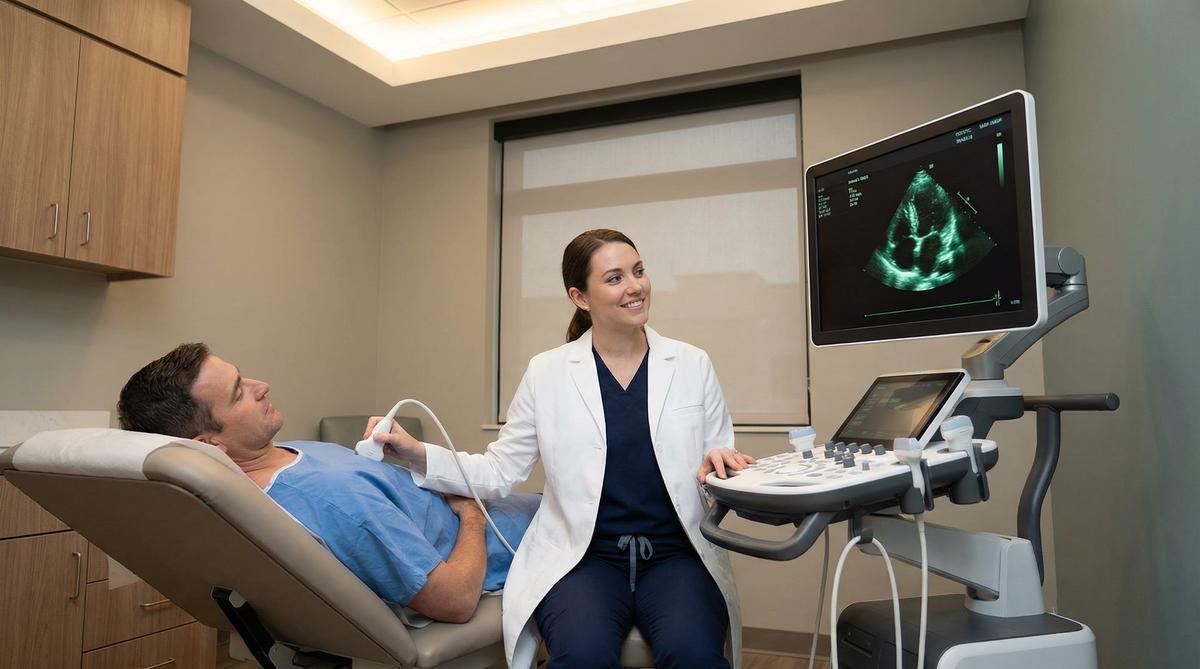
If you want to know how strong your heart muscle is, or if your heart valves are opening and closing correctly, you need an Echocardiogram. This is a highly detailed ultrasound scan of the heart. It uses high-frequency sound waves to create real-time moving images of the heart chambers, the muscular walls, and the major blood vessels entering and exiting the heart.
An echocardiogram is the gold standard for detecting heart failure, identifying heart murmurs caused by leaky or stiff valves, and assessing damage after a suspected silent heart attack. It is entirely painless and involves a sonographer moving a small probe across your chest.
Electrical Heart Tests: ECG and Holter Monitoring
If the structural mechanics are sound, the next step is to ensure the electrical signals that trigger each heartbeat are firing correctly. Arrhythmias (irregular heartbeats) can cause palpitations, dizziness, and significantly increase the risk of stroke.
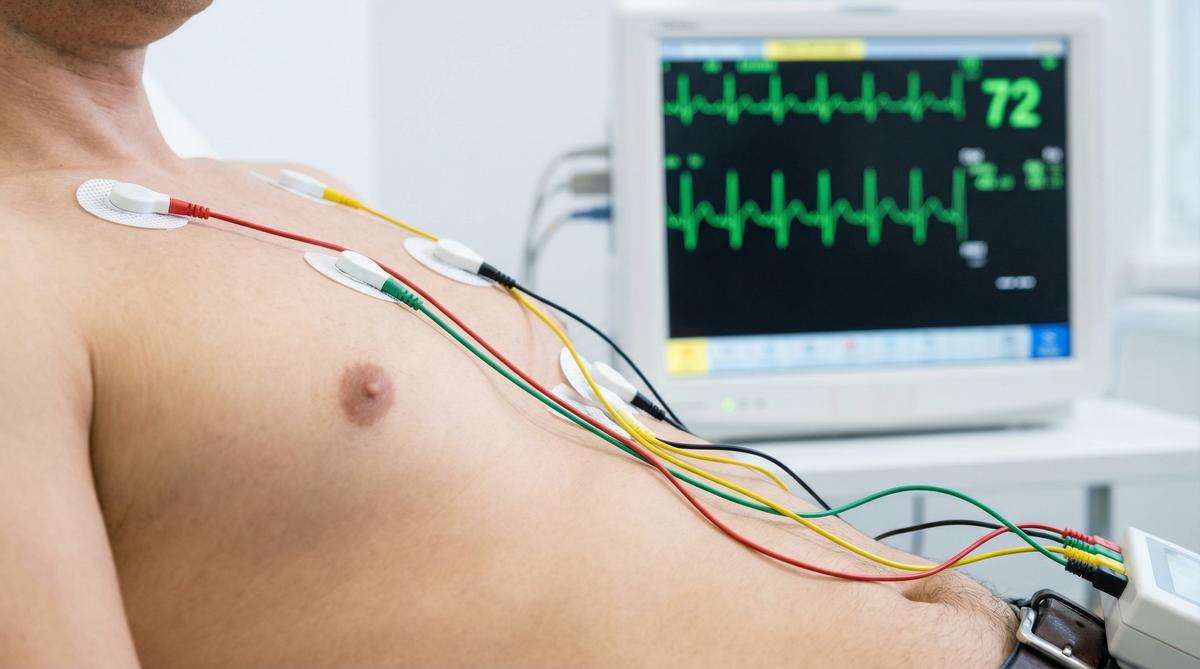
An ECG (Electrocardiogram) is a quick, non-invasive test that records the electrical activity of your heart at rest. Small adhesive electrodes are placed on your chest, arms, and legs, providing a "snapshot" of your heart's rhythm. It is excellent for identifying baseline abnormalities, such as atrial fibrillation (AFib) or conduction blocks.
However, because arrhythmias often come and go, a short clinic ECG might miss an intermittent issue. In these cases, a Holter Monitor is used. This is a small, portable ECG device worn continuously for 24 to 48 hours (or longer) as you go about your normal daily activities. It records every single heartbeat over that period, allowing clinicians to correlate any symptoms you feel with the exact electrical data recorded at that moment.
Vascular Risk Tests: Checking the Arteries
Heart health is inextricably linked to the health of your wider vascular system. The condition of your arteries often reflects the condition of your coronary vessels.
Carotid Doppler Scan (Stroke Risk)
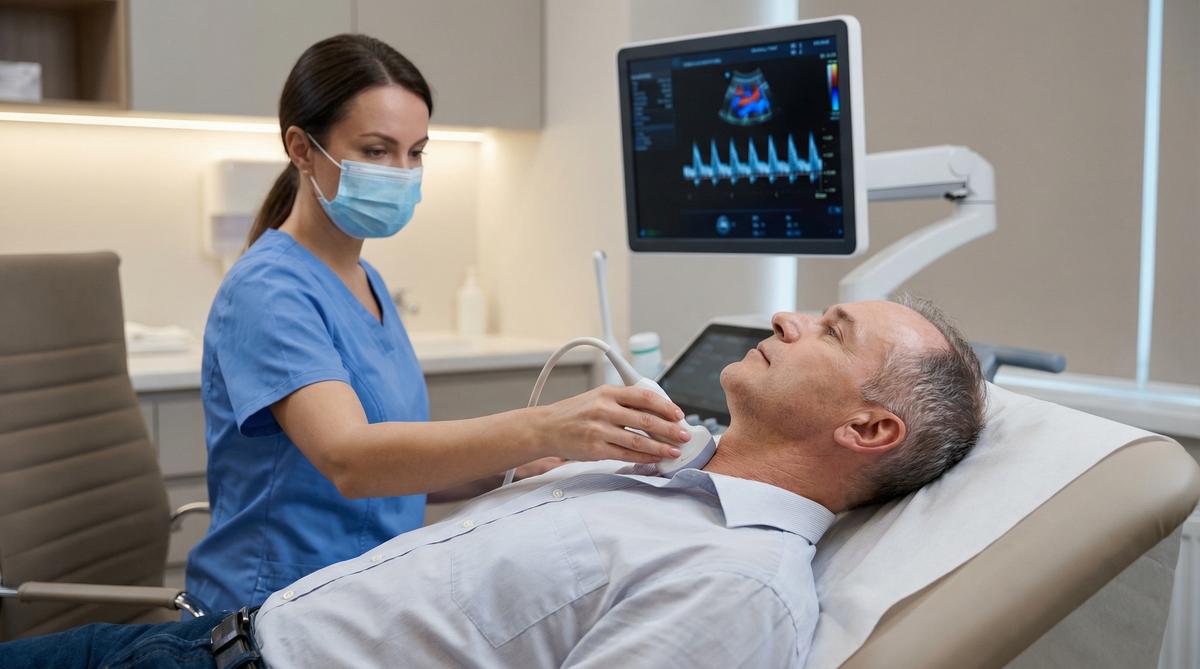
The carotid arteries in the neck are the primary vessels supplying oxygenated blood to the brain. Over time, fatty deposits (plaque) can build up inside these arteries, a condition known as atherosclerosis. If a piece of this plaque breaks off, it can travel to the brain and cause a stroke. A Carotid Doppler ultrasound scan accurately measures the thickness of the artery walls and the velocity of the blood flow, identifying dangerous narrowing before a stroke occurs. This is a core component of our comprehensive Stroke Screening package.
Aortic Aneurysm Scan
The abdominal aorta is the largest blood vessel in the body. In some individuals, particularly men over 65, the wall of the aorta can weaken and bulge outward, forming an aneurysm. A ruptured aortic aneurysm is a catastrophic medical emergency. An Aortic Aneurysm ultrasound scan is a fast, simple abdominal scan that measures the diameter of the aorta to ensure it is within safe limits.
Peripheral Circulation
For those experiencing leg pain when walking, or swelling in the lower limbs, an Arterial Duplex scan or a DVT (Deep Vein Thrombosis) scan can assess the blood flow in the legs, identifying blockages or dangerous blood clots.
Who Should Consider Heart Screening?
While anyone can benefit from understanding their baseline cardiovascular health, screening is particularly recommended for individuals who meet any of the following criteria:
Aged 40 or over, particularly men
A family history of heart disease, heart attacks, or stroke
High blood pressure (hypertension) or high cholesterol
A history of smoking or heavy alcohol consumption
Type 2 diabetes or insulin resistance
Experiencing unexplained breathlessness, palpitations, or fatigue
To complement the imaging, we also highly recommend our Health Screening Blood Tests, which provide the essential biochemical data—such as detailed lipid profiles and HbA1c levels—needed to form a complete cardiovascular risk assessment.
What to Expect at Sonoworld
We understand that undergoing cardiac testing can cause anxiety. At Sonoworld, our focus is on providing a calm, dignified, and highly professional environment. All our ultrasound scans and ECGs are completely non-invasive, painless, and involve no radiation.
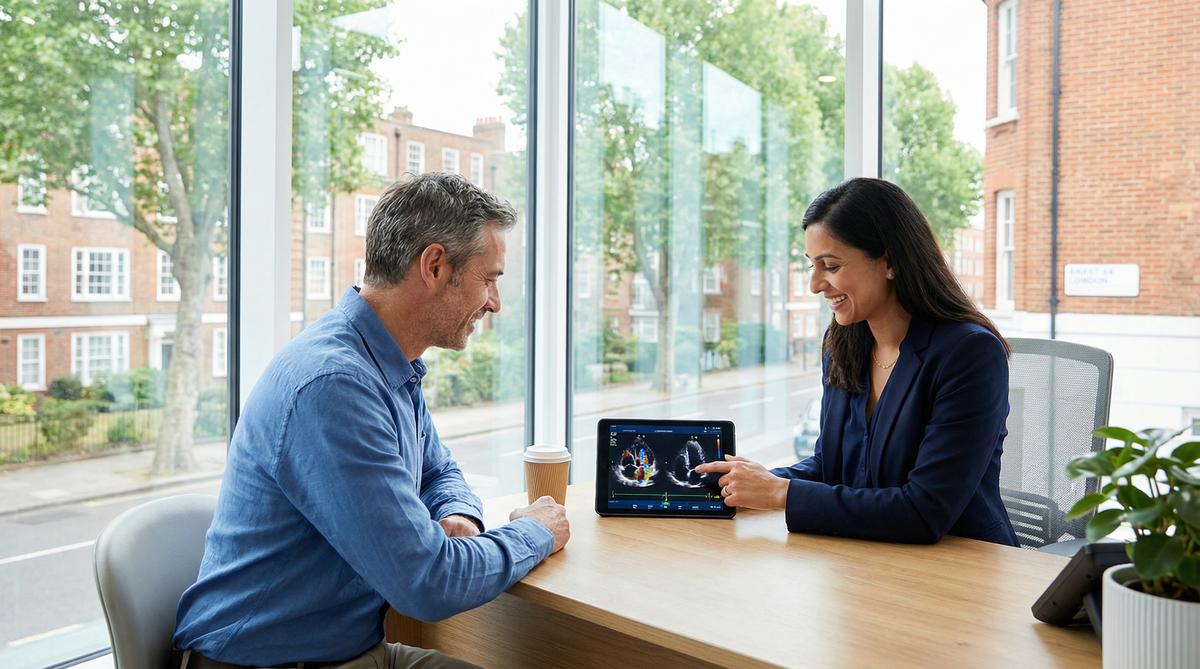
Because your assessment is performed by a specialist consultant sonographer, you will not be left waiting in the dark. The findings are explained to you clearly during the appointment, and a comprehensive written report is provided within 24 hours. If any abnormalities are detected, we provide immediate clinical guidance and can facilitate rapid referrals to consultant cardiologists.
Take Control of Your Cardiovascular Health
Your heart is your most vital organ. Do not wait for a warning sign to start taking its health seriously. Proactive screening provides the definitive data you need to protect your future.
You can book your heart screening appointment online today, or call our clinical team directly on 020 3633 4902 to discuss which combination of tests is most appropriate for your specific health profile. Secure your peace of mind with Sonoworld.