A dynamic, real-time ultrasound examination of the abdominal wall and groin to detect and characterise inguinal, femoral, umbilical, epigastric, and incisional hernias. Same-day written report. No GP referral required.
Prefer to speak to us first? Call 020 3633 4902
A hernia occurs when an internal organ or fatty tissue pushes through a weakness in the surrounding muscle or connective tissue wall. The groin and abdomen are the most common sites. While some hernias present as a visible, palpable lump, others — known as occult hernias — cause significant pain without any external sign at all.
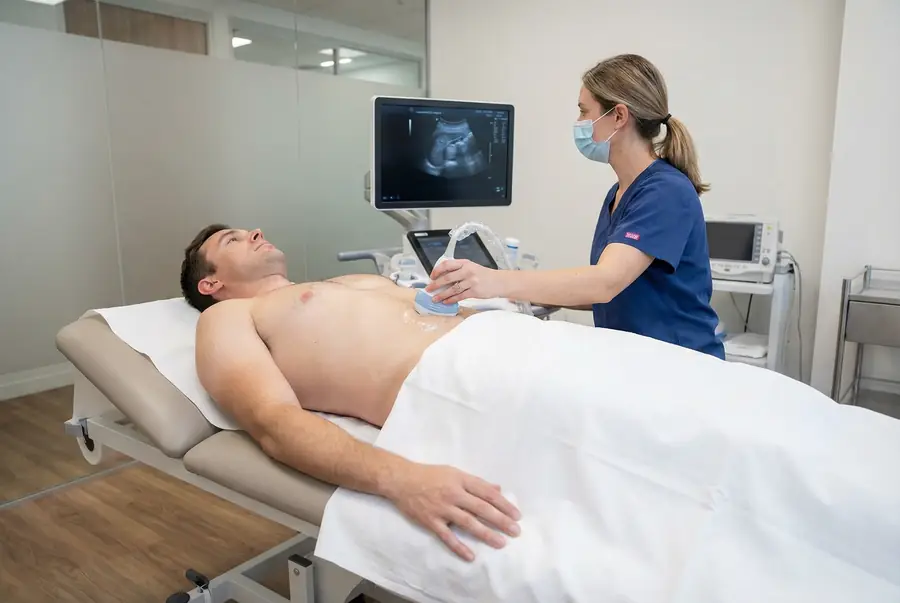
Ultrasound is the frontline imaging modality for hernia diagnosis. Unlike X-ray or CT, ultrasound is dynamic: the sonographer can ask you to cough or perform the Valsalva manoeuvre during the scan, increasing intra-abdominal pressure in real time. This reveals hernias that retract and remain invisible on static imaging. The technique is also used to assess the hernia's contents, measure the defect size, and evaluate whether the hernia is reducible or incarcerated.
At Sonoworld, the examination is performed by an HCPC-registered consultant sonographer using a high-frequency linear probe. You receive a written report with annotated images on the same day — accepted by GPs, surgeons, and private medical insurers.
Different hernias occur at distinct anatomical sites and carry different clinical implications. Our sonographers are trained to assess all common hernia types in a single appointment.
The most prevalent hernia type, accounting for around 75% of all abdominal wall hernias. Tissue or bowel protrudes through the inguinal canal in the groin. More common in men due to the anatomical path of the spermatic cord. Symptoms range from a visible groin bulge to deep aching pain during physical activity. Ultrasound differentiates direct from indirect inguinal hernias and assesses the hernia sac contents.
Umbilical hernias occur at the navel, where the abdominal wall has a natural point of weakness. Epigastric hernias develop in the midline between the navel and breastbone through the linea alba. Both types often contain fatty tissue (omentum) rather than bowel. Adults who develop these hernias may notice a soft lump that appears when straining or coughing and disappears when lying flat.
Femoral hernias protrude through the femoral canal, just below the inguinal ligament, and carry a higher risk of strangulation than inguinal hernias. Incisional hernias develop at the site of a previous surgical wound where the abdominal wall has been weakened. Ultrasound maps the defect size and identifies whether bowel is present within the hernia sac — critical information for surgical planning.
Many people live with undiagnosed hernias for months or years, attributing the discomfort to muscle strain or exercise-related soreness. Ultrasound provides a definitive answer within a single 20-minute appointment.
Book a hernia scan if you are experiencing any of the following:
Seek urgent medical attention if:
These signs may indicate a strangulated hernia, which requires emergency surgical intervention.
If your symptoms suggest a broader abdominal issue, consider combining your hernia scan with:
The entire appointment takes approximately 20 minutes. No special preparation is required.
No fasting or special preparation is needed. Wear loose, comfortable clothing that allows easy access to the groin and abdomen. Arrive at the clinic and check in at reception.
The sonographer will take a brief clinical history: location of symptoms, duration, whether the lump is reducible, and any relevant surgical history. This directs the examination and ensures the correct anatomical areas are assessed.
Warm gel is applied to the skin. The sonographer scans the area of concern using a high-frequency linear probe. You will be asked to cough or bear down (Valsalva manoeuvre) to increase intra-abdominal pressure and reveal any hernia in real time.
The sonographer explains the findings verbally at the end of the scan. You will know the result before you leave the clinic.
A comprehensive written report with annotated ultrasound images is issued on the same day. The report includes hernia type, location, size of the defect, hernia contents, and reducibility assessment. It is accepted by NHS and private surgeons.
All prices are all-inclusive. There are no hidden charges, no referral fees, and no additional costs for your written report.
Focused assessment of one anatomical region — e.g., right groin, umbilical area, or surgical scar site. Includes dynamic Valsalva assessment and same-day written report.
Assessment of both groins and the full anterior abdominal wall. Recommended when symptoms are bilateral or when a comprehensive pre-operative assessment is required.
Insurance & GP referrals: Sonoworld reports are accepted by all major private medical insurers. If your insurer requires pre-authorisation, please contact them before booking. GP referral letters are welcome but not required.
The scan itself is painless. If the area being examined is already tender due to the hernia, you may feel mild discomfort when the probe is pressed against the skin. The sonographer will always adjust the pressure to keep the examination as comfortable as possible.
Yes. Occult hernias — those that cause pain without a visible or palpable lump — are a recognised clinical entity. The dynamic nature of ultrasound, specifically the Valsalva manoeuvre, increases intra-abdominal pressure during the scan and can reveal a hernia that is not apparent on physical examination alone. This is one of the key advantages of ultrasound over clinical examination for groin pain assessment.
No referral is required. You can self-refer and book directly online or by calling 020 3633 4902. If your GP has already examined you and suspects a hernia, you are welcome to bring any referral letter, but it is not a prerequisite for booking.
A general abdominal scan focuses on internal organs — the liver, gallbladder, pancreas, spleen, and kidneys. A hernia scan specifically targets the abdominal wall, the inguinal canals, and the femoral canals, using a high-frequency linear probe and dynamic manoeuvres to detect structural defects. The two scans are complementary and can be combined in the same appointment if clinically appropriate.
Ultrasound provides the anatomical information that surgeons use to plan treatment: the type of hernia, the size of the defect, the contents of the hernia sac, and whether the hernia is reducible or incarcerated. The decision to operate is made by a surgeon based on these findings alongside your symptoms and overall health. The Sonoworld report is accepted directly by NHS and private surgical teams.
Your written report with annotated images is issued on the same day as your appointment. You will also receive immediate verbal feedback from the sonographer at the end of the scan. The report is sent electronically and can be forwarded directly to your GP or surgeon.
Sonoworld is located in Marylebone, Central London, a short walk from Regent's Park, Great Portland Street, and Oxford Circus underground stations. The clinic is easily accessible from across London and the South East.
29 Weymouth Street
Marylebone, London W1G 7DB
Nearest stations: Regent's Park · Great Portland Street · Oxford Circus