Book Scan
Cardiovascular · Vascular Ultrasound

Private DVT Ultrasound
Scan in London

Same-day compression ultrasound for suspected deep vein thrombosis. NICE-compliant proximal leg vein assessment by HCPC-registered specialist sonographers. CQC-registered Harley Street clinic, no GP referral required.

CQC Registered Good No GP Referral Needed Same-Day Results Harley Street, London

Instant verbal results. Written report within 24 hours.

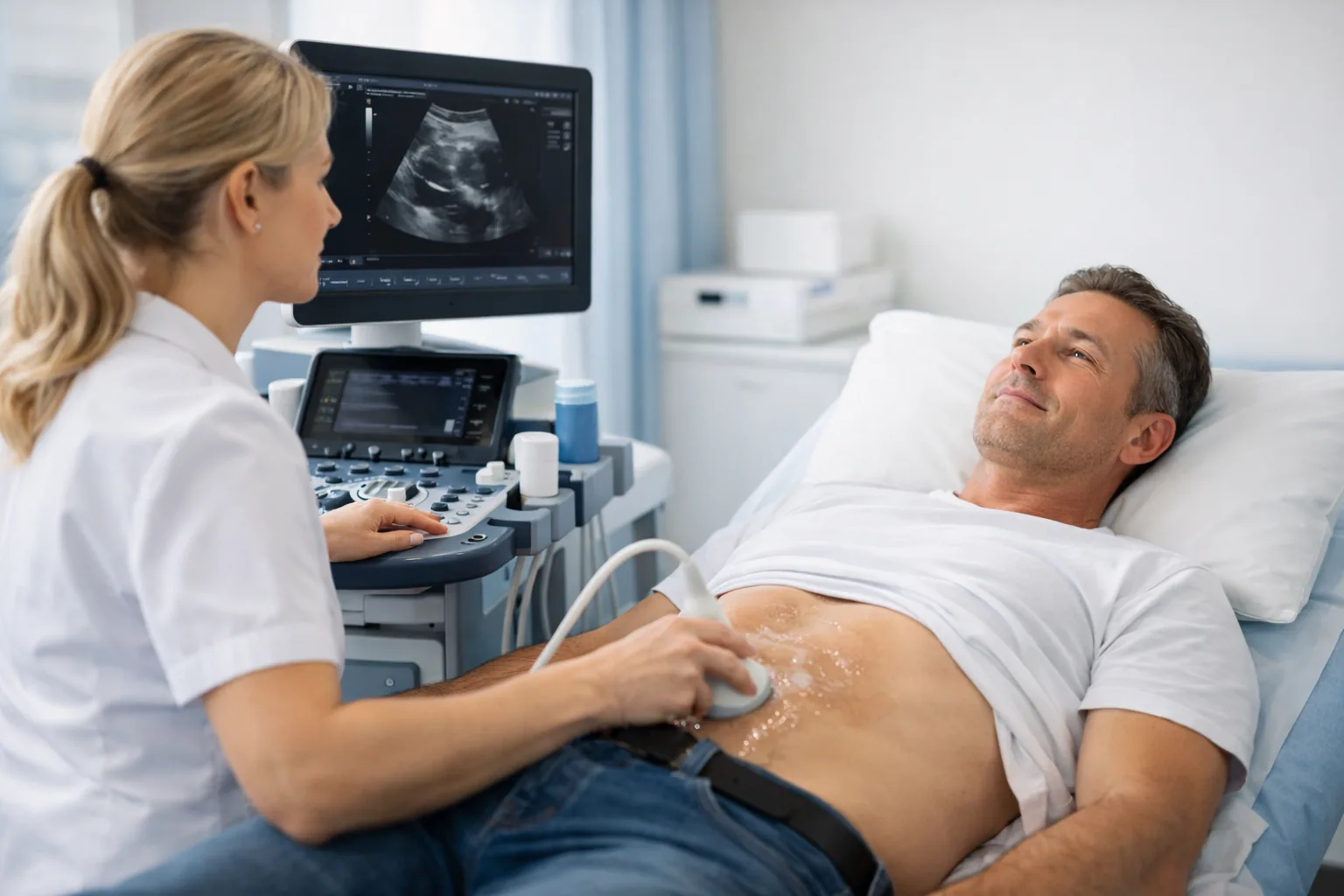
Private DVT ultrasound scan London — Sonoworld Harley Street clinic
£235All-inclusive price
30–45mScan duration
24hWritten report
4.9Patient rating
About This Scan

What Is a DVT Ultrasound Scan?

Deep vein thrombosis (DVT) is a blood clot that forms in one of the deep veins — most commonly in the leg. If untreated, a DVT can dislodge and travel to the lungs, causing a pulmonary embolism (PE), which is a life-threatening emergency. Rapid, accurate diagnosis is essential.

A DVT ultrasound scan uses compression ultrasound and Doppler imaging to assess the deep veins of the leg for clot. NICE guidelines (NG158) recommend a proximal leg vein ultrasound scan as the primary investigation for suspected DVT, with results ideally available within 4 hours. At Sonoworld, same-day appointments are available and results are provided immediately after the scan.

When to seek urgent assessment
  • Unilateral calf pain, swelling, or tenderness.
  • Redness or warmth in one leg.
  • Swelling of the entire leg or ankle.
  • Symptoms following a long-haul flight, long period of immobility, or recent surgery.
  • Known risk factors: cancer, pregnancy, oral contraceptive pill, previous DVT.
  • GP has calculated a Wells DVT score of 2 or more.
What We Check

What Is Assessed During Your DVT Scan

Proximal Veins

Femoral & Popliteal Veins

Compression ultrasound of the common femoral, femoral, and popliteal veins — the proximal deep veins most commonly affected by DVT. Non-compressibility is the primary diagnostic criterion for DVT.

Calf Veins

Tibial & Peroneal Veins

Assessment of the distal (calf) deep veins including the posterior tibial and peroneal veins. Calf DVT is assessed where clinically indicated, particularly in patients with isolated calf symptoms.

Doppler Assessment

Venous Flow & Augmentation

Colour Doppler and spectral waveform analysis to assess venous flow, spontaneity, phasicity, and augmentation. Absent or abnormal flow patterns support the diagnosis of DVT or venous obstruction.

Red Flags

When to Seek Urgent Medical Attention

If you develop sudden breathlessness, chest pain, or cough up blood alongside leg symptoms, this may indicate a pulmonary embolism — a medical emergency. Call 999 immediately and do not wait for a scan appointment.

For suspected DVT without respiratory symptoms, same-day assessment at Sonoworld is appropriate. A negative scan provides immediate reassurance; a positive result is communicated to your GP within hours to facilitate prompt anticoagulation.

Pulmonary embolism warning signs — call 999
  • Sudden unexplained breathlessness.
  • Sharp chest pain, especially on breathing in.
  • Coughing up blood.
  • Rapid heart rate or feeling faint.
  • Collapse or loss of consciousness.
Preparation

How to Prepare for Your DVT Scan

No special preparation is required for a DVT scan
  • No fasting is required.
  • Wear or bring loose, comfortable clothing that allows easy access to the leg.
  • Bring any previous scan reports, blood test results (D-dimer), or GP referral letter if available.
  • Arrive 5 minutes before your appointment time.
  • You may bring a companion to your appointment.
How It Works

What Happens at Your DVT Scan

1Arrival & Clinical History

Our specialist sonographer takes a brief clinical history including your symptoms, duration, risk factors, and Wells DVT score if calculated by your GP. This ensures the examination is appropriately targeted.

2Compression Ultrasound Examination

Gel is applied to the leg and the sonographer uses a high-frequency probe to compress the deep veins systematically from groin to calf. The examination is mildly uncomfortable but not painful.

3Immediate Verbal Results

Your sonographer explains their findings immediately after the scan. A negative scan provides immediate reassurance. A positive result is communicated to your GP by telephone within hours.

4Written Report Within 24 Hours

A comprehensive written report is emailed to you within 24 hours. Positive results are escalated to your GP immediately to facilitate urgent anticoagulation treatment.

Pricing

DVT Scan Price

£235 All-inclusive — no hidden fees
  • HCPC-registered specialist sonographer
  • NICE-compliant proximal leg vein compression ultrasound
  • Colour Doppler and spectral waveform assessment
  • Immediate verbal results
  • Written report within 24 hours
  • Urgent GP notification for positive results
Book Your DVT Scan

Also see: Cardiovascular Scans Hub · Cardiovascular Screening Package

FAQs

Frequently Asked Questions

Do I need a GP referral for a DVT scan?

No. You can self-refer directly online or by calling 020 3633 4902. However, if your GP has calculated a Wells DVT score, please bring this information to your appointment as it helps guide the examination.

How accurate is ultrasound for diagnosing DVT?

Compression ultrasound has a sensitivity of over 95% for proximal DVT (femoral and popliteal veins) and is the gold-standard investigation recommended by NICE guidelines (NG158). Sensitivity for isolated calf DVT is lower, and a repeat scan may be recommended if symptoms persist.

What happens if my DVT scan is positive?

If a DVT is confirmed, your sonographer will notify your GP by telephone immediately after the scan. Your GP will then arrange urgent anticoagulation treatment (typically a direct oral anticoagulant such as rivaroxaban or apixaban). You should contact your GP directly after the scan if you have not been contacted within a few hours.

Can ultrasound detect a DVT in the arm?

Yes. Upper limb DVT (affecting the axillary, subclavian, or brachial veins) can also be assessed by compression ultrasound. Upper limb DVT is less common but can occur in patients with central venous catheters, pacemaker leads, or thoracic outlet syndrome. Please mention arm symptoms when booking.

How long does a DVT scan take?

A standard proximal leg vein DVT scan takes approximately 30–45 minutes. Extended examinations including calf veins or bilateral leg assessment may take slightly longer.

Book Your DVT Scan — £235
crossmenu
Not sure which scan you need?
Sono AISonoworld Scan Advisor
Tap to Call